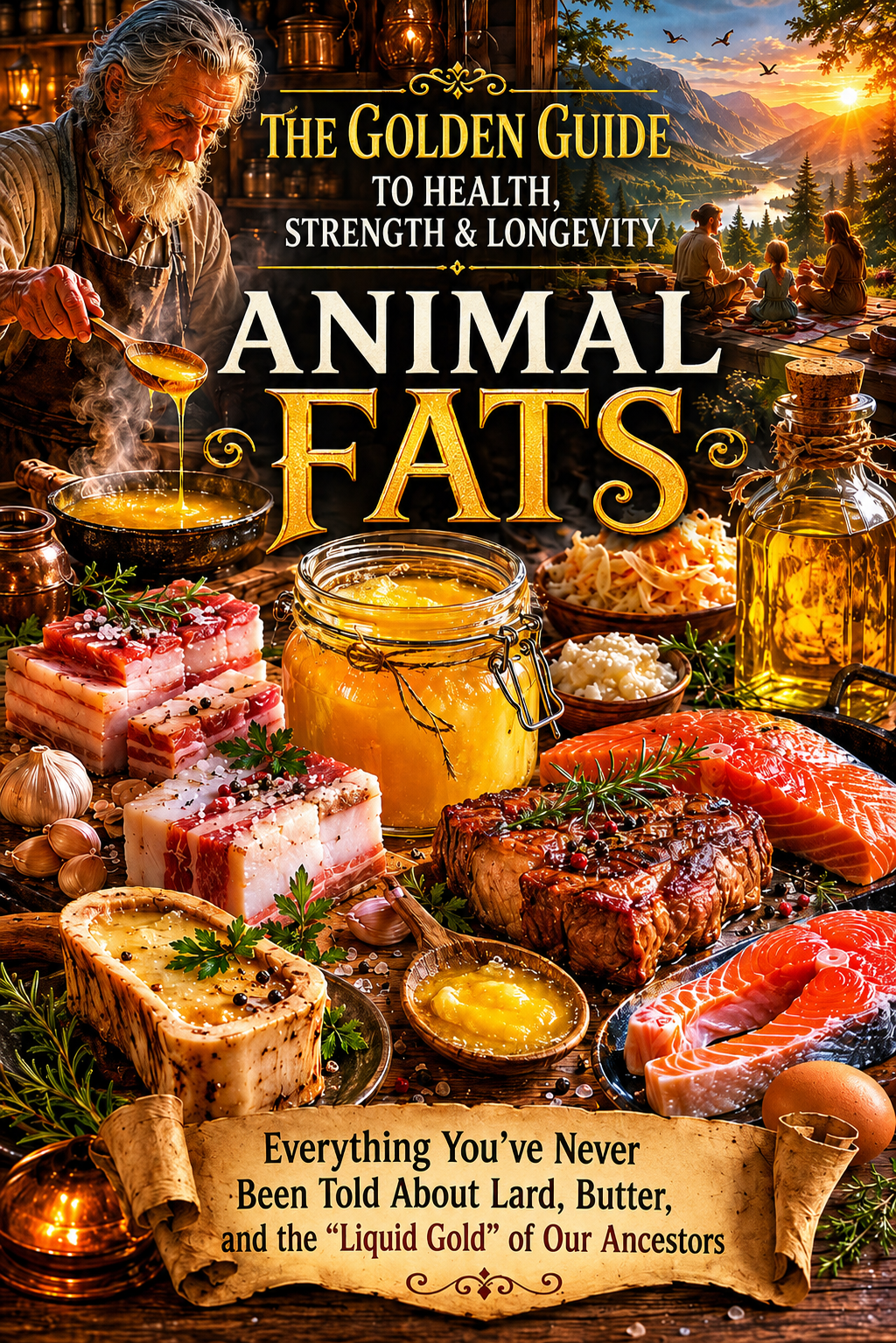
Animal fats — The Golden Guide cover
The Golden Guide  ·  Issue No. 1
I
Introduction

The Brain's Secret: Why We Became Human?

Animal lipids (the scientific term for animal fats) are complex regulators within our bodies, building cells and managing hormones. "The Golden Guide" will help you bring nature's wisdom back to your kitchen.

Did you know that our brain is nearly 60% fat? When healthy fats are cut from your diet, the brain is deprived of essential building blocks, leading to poor memory, scattered focus, brain fog, and chronic fatigue. Our ancestors valued animal fat as a vital source of energy, and modern science confirms it.

Fatty acids from fish, eggs, and meat — specifically DHA and AA — are the building blocks of nerve cells and their protective sheaths. Without them, children struggle to learn, and adults tire faster.

Who's Who in the World of Fats

Energy Fats
Provide an instant boost — like adding butter to your porridge.
🧱
Structural Fats
They form cell membranes, nerve fibers, and hormone receptors.
🛡
Protective Fats
Help absorb vitamins A, D, E, and K. A carrot without animal fat is just fiber.

📊 Quick Check: Is Your Brain Starving for Lipids?

Tick the boxes if you have experienced any of the following over the past month:

"3 PM Crash" — Sudden energy drop and intense sugar cravings in the afternoon.
Mental Static — Reading the same sentence 3 times without absorbing the meaning.
Brittle Focus — Feeling easily distracted, scattered, or overwhelmed by simple tasks.
Dry Horizon — Chronic dry skin or eyes, regardless of how much water you drink.

💡 If you checked even two boxes, your cellular membranes are likely running on empty. This guide will show you exactly how to refuel them efficiently.

II
Product Review

A Review of "Golden Fats" for Your Table

🍯
Clarified Butter (Ghee) — "The King of Fats"
Called "amrita" (nectar) in India
Pure milk fat free of lactose and casein. With a smoke point up to 250°C, it contains butyric acid, which heals the gut from within. It stands as one of the most stable frying fats in the world.
🥓
Lard and Salo — "Rustic Power"
Pork fat as a superfood
Rich in oleic acid — the very same found in olive oil. If the pig roamed in the sunshine, its fat is also an excellent source of vitamin D. It makes pastry tender and crusts beautifully golden.
🦴
Bone Marrow — "The Forgotten Superfood"
97% fat, 100% goodness
A powerhouse of energy, rich in collagen for joint health and saturated fats for producing sex hormones (testosterone and estrogen), cortisol, and vitamin D. Remember tapping the marrow out of a soup bone as a kid? That was the smartest thing you could do!
🐻
Bear and Badger Fat — "The Forest Pharmacy"
Wild natural power
Bears harvest the full power of forest herbs before hibernation. These fats are rich in vitamins A and E, heal the skin, and soothe colds. Traditional medicine has relied on them for centuries.
Ostrich and Emu Fat — "The Exotic Healer"
70% healthy unsaturated fats
It penetrates deep into the skin, relieves joint inflammation, and even helps soothe eczema. Widely used in professional skincare.
III
🔬 Scientific Facts

12 Scientific Facts: The Hidden Power on Your Plate · Part 1

Here is what mainstream advertising for low-fat products leaves unsaid.

01
Dairy Longevity
Butter and cream contain a rare acid called C15:0 — pentadecanoic acid — a unique saturated fat that strengthens cell walls and protects them from premature breakdown. It reduces the risk of type 2 diabetes by 27% and protects against fatty liver disease.
02
The Vitamin Navigator
Animal fat is the only reliable source of vitamin K2 in the form of MK-4 (menaquinone-4, a bioavailable form of K2 produced by animal tissues). It removes calcium from blood vessels (preventing atherosclerosis) and directs it into bones and teeth.
03
Brain Building Blocks
Fats from eggs and wild-caught fish contain DHA (docosahexaenoic acid, an essential Omega-3 that builds the retina and gray matter) and AA (arachidonic acid, an essential Omega-6 responsible for the speed of nerve signaling).
04
Hormonal Foundation
Testosterone and estrogen — male and female sex hormones — are built exclusively from cholesterol. Without it, libido (natural sex drive and vital energy) plummets, and reproductive health suffers.
05
Gut Shield
Certain components of animal fats, specifically butyric acid (a short-chain fatty acid found in clarified butter), can help maintain intestinal epithelial health and gut barrier integrity. However, the impact of diet on allergic conditions is always highly individual and requires a comprehensive approach.
06
Vision Protection
Fat is an essential delivery vehicle for lutein (a natural pigment that protects eyes from aging). Without fat, lutein cannot reach the retina, yet it is what maintains visual acuity throughout your life.
III
🔬 Scientific Facts

12 Scientific Facts: The Hidden Power on Your Plate · Part 2

07
Smart Fats
Beef contains natural CLA — conjugated linoleic acid — a beneficial fatty acid isomer with anti-inflammatory properties. Unlike industrial margarines, it helps build muscle and burn stubborn belly fat.
08
Bone Marrow Elixir
At 97% fat, it is uniquely rich in collagen (the primary protein of connective tissue). It serves as a natural lubricant for joints and a source of skin elasticity. Remember tapping the marrow out of a soup bone as a kid? That was the smartest thing you could do!
09
Practicality and Safety
Natural animal fats are the best choice for frying: their saturated structure makes them highly heat-stable and prevents them from releasing carcinogens. In contrast, many vegetable oils (sunflower, soy, etc.) oxidize and become toxic at high temperatures. Animal fats are both more practical and safer for your health.
10
The Bear Effect
In traditional folk medicine, bear fat has been used for centuries to support the body during recovery from respiratory illnesses and to protect the skin in harsh weather conditions.
11
Marine Supremacy
Antarctic krill oil (sourced from tiny crustaceans in pristine polar waters) is absorbed by the body much faster than standard fish oil — its phospholipid structure is 100% compatible with human cell membranes.
12
The Heart Craves Fat
The PURE study — the largest dietary study in medical history, tracking 135,000 people — revealed a link between moderate consumption of natural fats and the absence of any expected increase in all-cause mortality, challenging several outdated nutritional dogmas.
IV
Perfect pairings

25 Perfect Pairings: Synergy for Your Organs

How to combine foods so that one amplifies the benefits of the other.

🥕 Carrots + Butter 🧈
Fat converts carotene into active Vitamin A
Vision · Immune
🍅 Tomatoes + Beef Tallow 🥩
Lycopene is only activated when heated with fat
Heart
🥬 Spinach + Lard 🥓
Vitamin K can only be absorbed with saturated fat
Vessels
🌾 Buckwheat + Ghee 🍯
Butyric acid helps minerals enter the bloodstream
Nerves · Digest
🍄 Mushrooms + Goose Fat 🦆
Fat extracts rare "sunshine" Vitamin D
Bones · Mood
🥗 Sauerkraut + Pork Fat 🥩
Cabbage enzymes break down heavy fats seamlessly
Metabolism
🎃 Pumpkin + Cream 🥛
Beta-carotene transforms into "skincare from within"
Skin
💛 Turmeric + Egg Yolk 🍳
Fat in yolk amplifies curcumin effects by 2,000 times
Joints
🥩 Steak + Kiwi 🥝
Vitamin C helps maximize iron absorption from meat
Blood · Energy
🫘 Beans + Clarified Butter 🧈
Fat softens coarse fiber, eliminating bloating
Gut Health
🥦 Broccoli + Fatty Fish 🐟
Vitamin D + Calcium = a skeleton of solid steel
Bones
🍎 Apples + Bacon 🥓
Fat and protein slow down fruit sugar absorption
Insulin
🥩 Liver + Duck Fat 🦆
Animal lipids unlock heavy Vitamin A & copper stores
Immunity
🧄 Garlic + Lard 🥓
Active allicin binds with fat for vascular defense
Vessels
🌿 Rosemary + Beef Tallow 🥩
Carnosic acid stabilizes lipids, halting lipid oxidation
Anti-ox
🥚 Egg Yolk + Asparagus 🌱
Lecithin enhances absorption of prebiotic saponins
Liver · Bile
🥥 Coconut + Dark Chocolate 🍫
MCT fats fast-track cocoa flavanols directly to the brain
Brain · Focus
🌿 Thyme + Duck Fat 🦆
Monounsaturated lipids fully dissolve antimicrobial thymol
Gut Immune
🧅 Red Onion + Lard 🥓
Lipid matrix increases quercetin bioavailability by 5x
Vessels
🐟 Wild Salmon + Butter 🧈
Dairy lipids aid astaxanthin absorption into chylomicroons
Eyes · Skin
🥩 Lamb + Cumin 🌿
Cuminaldehyde triggers lipase to digest dense animal fats
Pancreas
🥬 Cabbage + Goose Fat 🦆
Vitamin U + oleic acid accelerate gastric lining repair
Stomach
🌱 Cloves + Ghee 🍯
Butyrate delivers lipophilic eugenol to deep tissues
Oral · Gut
🫚 Ginger + Chicken Fat 🍗
PUFA lipids smooth gingerol transport to soothe muscles
Recovery
🥛 Sour Cream + Radish 🥗
Cream lipids buffer hot isothiocyanates for stomach comfort
Gastric
V
Myths · Cooking

The Truth About Cholesterol and Frying · Part 1

The Ultimate Myth: "Is Fat Bad for Your Heart?"

Many people fear fat because of cholesterol. However, the landmark PURE study — a massive undertaking involving over 135,000 participants — revealed a far more nuanced picture of how animal fats impact health than previously thought. The data linked moderate consumption of natural fats to a lack of the expected increase in all-cause mortality.

The real enemy of health is the inclusion of sugar, "chemical" trans fats from margarine, and other unnatural fats in your diet.

Unnatural fats are synthesized or artificially modified lipid compounds. These include trans fats (hydrogenated oils) and artificial substitutes engineered to mimic the taste and texture of natural products. They are widely used in the food industry to extend shelf life.

Primary types of unnatural fats:

  • Industrial trans fats: Liquid vegetable oils converted into solid fats through chemical hydrogenation. Commonly found in margarine, cheap butter, fast food, and baked goods.
  • Synthetic fats (olestra): Artificially created compounds of sugar and fatty acids that the body cannot digest. Used as low-calorie fat substitutes.
  • Ultra-refined industrial oils: Blended fats for pan-frying and deep-frying derived from cheap plant sources via chemical modification — including non-cold-pressed sunflower, canola, soy, corn, and palm oils.
🇫🇷 Science Insight: The French Paradox
The Phenomemon: Officially coined in 1991, the "French Paradox" stunned researchers. The French traditionally consume high amounts of saturated fats—butter, rich cheeses, cream, and lard. Yet, their mortality rate from heart disease remained 2 to 3 times lower than in the US or UK, where fat intake was similar or even lower.
Modern Verdict: Natural saturated fats from high-quality sources are safe in moderation. The real culprits behind vascular inflammation and heart disease are industrial trans fats, over-processed fast foods, and chronic excess of refined sugar.
V
Myths · Cooking

The Truth About Cholesterol and Frying · Part 2

Kitchen Cheat Sheet: Best Fats for Frying

FatSmoke PointStabilityBest Use
Ghee (Clarified Butter)250 °CExtremeSteaks, Asian cuisine
Beef Tallow205–250 °CVery HighDeep-frying, roasting
Lard (Pork Fat)185–200 °CHighBaking, sautéing
Chicken Fat190 °CMediumSautéing, sauces
Duck / Goose Fat190 °CMediumRoasting potatoes
Butter150–175 °CLowFried eggs, adding to porridge
Important: never let fat heat to its smoke point! If the pan starts smoking, the fat is turning toxic. Marinate meat with rosemary, thyme, and garlic — these natural antioxidants act as a shield. When fat drips onto hot coals and the smoke infuses the meat, harmful chemicals form (HCAs and PAHs). If the crust becomes heavily charred, slice it off before eating.
⚠️ The Dark Side of Vegetable Oils

Many people avoid animal fats for frying, choosing seed oils (sunflower, corn, soy) thinking they are "heart-healthy." In reality, when heated, these chemically refined oils undergo a disastrous transformation.

💥 Aldehyde Bomb
Polyunsaturated fats (Omega-6) break down into toxic aldehydes upon heating, which are linked to cellular inflammation.
🧬 Trans-Fat Creation
Prolonged or high heating of delicate vegetable structures alters their molecules, creating artificial trans-fats right in your pan.
Conclusion: For heating, always lean on stable, saturated animal fats (Ghee, Tallow) that shield your health from thermal damage.
VI
Marine · Deep-Sea Lipids

Oceanic Animal Fats: Fish Oil and Krill Oil · Part 1

While solid land-based animal fats provide us with energy and build hormones, the cold depths of the ocean offer liquid gold — essential long-chain Omega-3 fatty acids. Our bodies cannot synthesize them on their own, meaning they must be consumed through our diet every day.
🐟
1. Fish Oil — The Classic Health Guardian
Sourced from wild-caught fatty fish: salmon, mackerel, sardines, or cod liver
The Omega-3 fatty acids in fish oil are bound as triglycerides — the natural form of fat storage in fish. Absorption requires bile acids and pancreatic enzymes.
❤️
Heart & Blood Vessels
EPA (eicosapentaenoic acid) lowers blood triglycerides, clears blood vessels, and thins the blood to help prevent clots.
🧠
Brain & Nerves
DHA (docosahexaenoic acid) integrates into brain cell membranes, improving memory and protecting against age-related dementia.
⚠️ Important — Oxidation: Fish oil is highly unstable. Exposure to light and heat causes it to go rancid quickly, turning it into a toxic mix of free radicals. Only purchase in dark glass bottles and store in the refrigerator!
🔬Bio-Hacker’s Tip: 2 Simple Ways to Spot Spoiled Fish Oil
1. The Taste Test (Bite the Capsule): High-quality, fresh fish oil should have a very mild, pleasant fishy flavor, similar to fresh caviar. If it tastes aggressively bitter, sour, or heavily "fishy," it has already oxidized and should not be consumed.
2. The Freezer Test: Put a capsule in your freezer for 5 hours. Natural, pure triglyceride fish oil **should not freeze solid or turn opaque/white**. If it freezes like ice or gets cloudy, it may contain a high amount of cheap saturated fats or chemical impurities.
Part 2
🦐
2. Krill Oil — The Liquid Ruby of the Antarctic
Sourced from Antarctic krill dwelling in pristine, icy waters
The Omega-3s here are bound to phospholipids — they mix instantly with gastric juices and are absorbed 30–50% more effectively than fish oil.
💎
Astaxanthin
The most powerful natural antioxidant. It prevents the oxidation of Omega-3 bonds without artificial preservatives and protects body cells from aging.
🧬
Choline
Essential for the liver to prevent fatty liver disease and for the brain to synthesize acetylcholine — the neurotransmitter for memory and learning.
🌊
Purity of the Source
Krill do not accumulate mercury or heavy metals, as they feed on phytoplankton in pollution-free waters.

Comparison Table: Fish Oil vs. Krill Oil

ParameterFish OilKrill Oil
Omega-3 FormTriglyceridesPhospholipids
BioavailabilityStandard30–50% Higher
AntioxidantVitamin E (added)Astaxanthin (natural)
CholineNonePresent
StabilityLight-unstableProtected by astaxanthin
PriceAffordableAbove average

The top choice is krill oil for daily supplementation.
Fish oil remains a time-tested and more affordable alternative.
Bottom line: either option is far better than lacking them in your diet entirely.

VII
Home Recipes

How to Make Ghee: Three Proven Methods · Part 1

Ghee is true "liquid gold" for your kitchen. It is pure milk fat, completely free of water, lactose, and casein. With a smoke point of 250°C, it keeps for years and features a rich, nutty, caramel aroma.
Secret No. 1 — Choosing the Butter: Use only unsalted butter with at least 82.5% butterfat. The ingredients should list nothing but pasteurized cream. Cheaper 72.5% butter won't yield good ghee — there is simply too much water and whey.

Recipe 1. The Classic Stovetop Method ("Grandma's Style")

1
Preparation
Use a heavy-bottomed pot — a cast-iron Dutch oven is ideal. Thin cookware won't work, as the butter will burn quickly.
2
Melting
Melt over medium heat. As soon as it comes to a boil, turn the heat down to the absolute minimum. The butter should simmer gently, not boil vigorously (≈ 85°C).
3
Skimming the Foam
Skim off the white foam every 10 minutes. Do not stir — the milk solids must settle to the bottom undisturbed.
4
Simmering Time
450g — ≈ 1 hour · 1kg — ≈ 1.5 hours · 2.3kg — ≈ 3 hours. The ghee is ready when it turns as crystal clear as an amber tear.
5
The Finishing Touch
Slightly increase the heat (≈ 120°C) for 2 minutes — the sediment will brown and release its nutty flavor. Keep a close eye on it: if it burns, the ghee will turn bitter!
VII
Home Recipes

How to Make Ghee: Three Proven Methods · Part 2

Recipe 2. The Lazy Oven Method

Preheat your oven to 150–160°C. Place the butter in a glass baking dish (with sides 3–4 cm higher than the butter level). Bake for 1.5–2 hours per kilogram. Alternatively, for a gentle approach that preserves maximum nutrients, bake at 80–90°C for 5–6 hours.

Recipe 3. The Modern Slow Cooker Method

Use the "Slow Cook" or "Simmer" setting at 85°C for 10–12 hours with the lid open. Skim off the foam with a slotted spoon, then strain through 3–4 layers of cheesecloth into a jar.
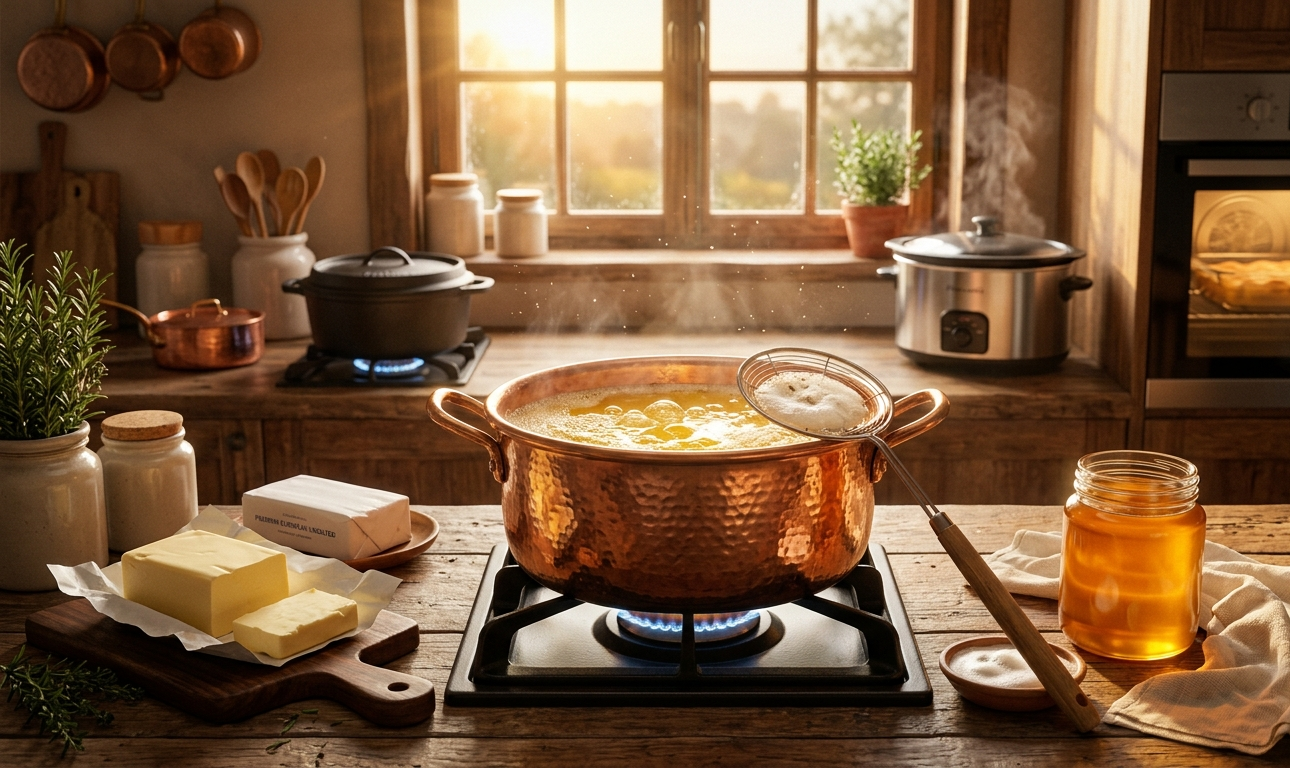
Storage: Let it cool uncovered for 1–2 hours. Sealed in a jar and kept in a dark pantry, it will last for a year. Once opened, it keeps at room temperature for up to 1 month, or in the refrigerator for up to 3 months. Always use a perfectly clean, dry spoon!
Making Ghee
VIII
🔧 Practical Tips

12 Household Life Hacks: How Fat Helps Around the Home

Animal fat is not just healthy, nutritious, and delicious food; it is also humanity's very first "multi-tool."
👢
Waterproof Footwear
Rub tallow into the seams and surface of leather boots. It creates a natural water barrier, even in slushy weather.
🚪
Squeaky Doors
A drop of lard on the hinges — eco-friendly, odorless, and better than any harsh chemicals.
🍳
The Forever Pan
Coat cast iron with fat and season it in the oven. It creates a non-stick layer that only gets stronger over time.
🌿
Skin Relief
Lard or bear fat is the ultimate remedy for cracked heels and dry hands during the winter.
🔪
Knife Protection
Coat steel knives with a thin layer of fat before storing them — the best way to prevent rust.
🔥
Bad-Weather Fire Starter
A cotton pad soaked in fat burns long and bright, even in heavy rain.
🕯
Survival Candle
Fat in a jar with a cotton thread wick makes an emergency candle that lasts for hours.
🎣
Angler's Trick
The scent of lard in groundbait attracts fish, boosting your catch rate significantly.
🏷
Adhesive Remover
Fat easily dissolves sticky residue left by labels and stickers on jars and furniture.
🔧
Hand Shield
Rub fat onto your hands before doing dirty work — grease and grime will wash off with soap in seconds.
🪚🪏
Tool Storage
Wipe down saws and shovels with fat before winter. They will look brand new by spring.
👝
Stuck Zippers
Rub a piece of cured pork fat (salo) over a stubborn zipper — the teeth will glide smoothly.
IX
Housekeeping

12 Ways to Remove a Grease Stain

Salt — First AidCover the stain immediately — salt will draw grease out of the fibers like a sponge.
Dish SoapApply to dry fabric and leave for 15 minutes — the gel breaks down fat molecules.
Chalk or Talcum PowderRub onto the stain and leave overnight. It even works on silk.
Iron + PaperPlace a paper towel over the stain and press with a warm iron. The grease will melt and absorb into the paper.
Mustard PowderA paste of dry mustard and water acts as a natural solvent that won't fade colors.
Bile SoapA professional secret: natural ox gall literally "devours" stains.
StarchA magnet for fresh grease on carpets and upholstery.
Laundry SoapAn alkaline environment — an old-school but effective method for set-in grease.
Rubbing Alcohol or VodkaSoftens stubborn, hardened grease before the main wash.
Tooth PowderHighly effective for grease on light-colored collars and cuffs.
Lemon JuiceThe acid breaks down the stain's structure on light fabrics.
Boiling WaterFor heavy cotton: pour from a height of 20–30 cm — the pressure and temperature flush the grease out of the fibers.
X
Beauty & Skincare

Heritage Beauty: Elixirs of Youth

Animal lipids closely mimic our skin's natural composition, making them perform better than any synthetic alternatives.
🐑
Lanolin
A natural wax sourced from sheep's wool. The ultimate remedy for healing chapped lips and delicate skin. It locks in moisture and creates a breathable protective barrier.
🐄
Tallow Cream
Beef tallow is 100% compatible with human sebum. It delivers vitamins A, D, E, and K in their bioavailable forms. It absorbs instantly, leaving dry skin feeling silky smooth.
🐻
Bear Fat
Ideal for hair-strengthening masks and protecting the face from frostbite. It serves as a natural concentrate of nutrients and wild herbs gathered over the summer.
🦡
Badger Fat
A traditional remedy for coughs used as a chest and back rub. For skincare, it provides deep nourishment and is exceptionally rich in monounsaturated fatty acids.

✨ Did You Know?

Historical records show that Cleopatra’s legendary youth-preserving creams weren't made from plant oils, but relied heavily on purified animal lipids mixed with honey and rosewater. Because these fats share an identical cellular blueprint with human skin, they bypassed the surface barrier, delivering deep hydration that ancient nobility swore by.

XI
🎬 Culture

Top 12 Films About Animal Fats · Part 1

Where characters admire the flavor and power of natural fats.

Feature Film
"Julie & Julia" (2009)
Meryl Streep: "You can never have too much butter!" — an ode to butter as the definitive foundation of French cuisine.
Feature Film
"Babette's Feast" (1987)
A beautiful story of how luxurious dishes prepared with rich animal fats can melt even the coldest of hearts.
Disney Animated Short
"Out of the Frying Pan into the Firing Line" (1942)
Minnie Mouse and Pluto teach wartime viewers to save every single gram of bacon grease and meat fat for the war effort.
Pixar Animation
"Ratatouille" (2007)
It is animal fats that provide that velvety richness in sauces that left the fierce culinary critics utterly spellbound.
Feature Film
"Big Night" (1996)
An Italian culinary classic: rich meats and butter-infused sauces become the ultimate force that brings a family together.
Documentary
"Fat: A Documentary" (2019)
Featuring Dr. Ken Berry, this film overturns decades of nutritional myths. Scientists, doctors, and patients demonstrate how a ketogenic diet and natural animal fats restore metabolism, nourish the brain, and defeat chronic illness where conventional medicine fails.

"Fat is not the enemy.
Fat is your energy, your hormones, and a sharp mind!"

XI
🎬 Culture

Top 12 Films About Animal Fats · Part 2

Documentary
"The Magic Pill" (2017)
What if diet plays a far more critical role in modern health than conventional wisdom suggests? The film follows several individuals with severe illnesses who, within weeks of adopting a high-fat diet, achieve results that years of medication could not replicate.
Documentary
"Cereal Killers" (2013)
Athlete and journalist Donal O'Neill learns that his genetics heavily predispose him to heart disease. He goes all-in: completely cutting out sugar and grains to adopt a high-fat, high-protein diet. Doctors are stunned as his biomarkers become optimal. A provocative real-time experiment.
Feature Film
"The Hundred-Foot Journey" (2014)
Ghee versus traditional butter — a cinematic and flavorful clash between Indian and French culinary traditions.
Documentary
"Fat Head" (2009)
A sharp, eye-opening experiment demonstrating that natural fats are inherently safer for the human body than sugar-laden processed foods.
Feature Film
"Eat Pray Love" (2010)
Indulging in authentic pasta and cheeses in Italy: embracing the pure joy of rich food as an essential act of self-love.
Animation
"Wallace & Gromit" (1989)
Aromatic cheeses and golden toast slathered in butter — a charming testament to the classic British love for traditional fats.
XII
⚠️ Important Information

Who Should Exercise Caution

Despite the potential benefits of natural animal fats, any dietary adjustments must carefully consider individual health profiles and bodily characteristics.

It is crucial for certain individuals to exercise particular caution:

Those with Gallbladder Conditions Animal fats stimulate bile production, which can exacerbate symptoms in individuals with gallstones or cholecystitis.
Those with Pancreatitis An inflamed pancreas struggles to break down and process fats, especially during acute flare-ups.
Those with Severe Lipid Metabolism Disorders Certain genetic and metabolic conditions require strict monitoring and control of dietary fat composition.
Those with Liver Conditions The liver is the primary organ responsible for processing fats. In cases of liver dysfunction, fat intake must be coordinated with a physician.
Those with Individual Intolerances Certain animal-derived products can trigger adverse reactions in individuals with specific immune system sensitivities.

When in doubt — consult a qualified specialist.
Understanding your own body is far more important than any general advice.

Disclaimer

This book is for educational and informational purposes only and does not substitute for professional medical advice, diagnosis, or treatment. Any dietary changes should be adapted to individual health profiles.

XIII
⚠️ Important Information

How to Gradually Introduce Animal Fats

A sudden increase in dietary fat intake is not suitable for everyone. The body often requires time to adapt.

A Practical and Gentle Approach

Start Small
Beginning with small portions — a teaspoon of ghee or a bite of cured fat — allows your digestive system to adjust gradually without overwhelm.
Monitor Your Response
Track your digestion, energy levels, and overall well-being. High-quality fats should not cause a feeling of heaviness or discomfort.
Prioritize Quality
Opt for natural, minimally processed products sourced from trusted and verified producers.
Avoid Overeating
Fat is a highly concentrated source of energy. Moderation remains the absolute key to metabolic balance.
Pair with Whole Foods
Fats are absorbed best when combined with vegetables, leafy greens, and protein — mirroring the ancestral diets of our forefathers.
The most sustainable path forward is a gradual, mindful shift in your diet. Free from haste, stress, and extremes.
Evolutionary Insight

For thousands of generations, human physiology evolved on nutrient-dense animal fats. The temporary "heaviness" some experience today isn't a rejection of fat, but a reflection of modern low-fat diets slowing down bile production. By introducing high-quality fats **gradually**, you gently signal your liver and gallbladder to wake up their natural, ancestral digestive strength.

XIV
⚠️ Important Information

How to Choose High-Quality Animal Fats

The quality of a fat determines its benefits. The exact same product can be healing or harmful — depending entirely on its origin and processing.
✅ Good Signs
  • Minimal processing
  • Transparent sourcing
  • Absence of a rancid odor
  • High-quality raw ingredients
  • Grass-fed (whenever possible)
❌ What to Avoid
  • Cheap hydrogenated products
  • Artificial flavors
  • Prolonged overheating
  • Questionable origin
The One-Step Rule: Replace just one familiar product with a high-quality alternative. Start with premium butter containing at least 82.5% butterfat, made exclusively from cream — and you have already taken your first step toward mindful nutrition.
💡 Quick Wisdom: Myth vs. Reality
Myth "The color of high-quality butter must always be stark white."
Reality Natural high-quality summer butter has a distinct **yellowish tint** because grass-fed cows consume beta-carotene from fresh pastures. Winter butter is naturally paler.
Myth "Animal fats melt instantly at any room temperature."
Reality Premium fats (like tallow or ghee) remain solid and stable at room temperature. If your animal fat softens or separates too quickly in a cool room, it might contain hidden vegetable oils.
The Golden Guide  ·  Issue No. 1
📚 Scientific Foundation: The Sources We Relied Upon · Part 1
On Saturated Fats and Heart Health
1. Harvard T.H. Chan School of Public Health. The Nutrition Source: Fats and Cholesterol. hsph.harvard.edu/nutritionsource
2. Dehghan M. et al. Associations of fats and carbohydrate intake with cardiovascular disease and mortality in 18 countries. The Lancet (PURE Study), 2017.
3. BMJ. Saturated Fat Intake and Risk of Heart Disease: The Nurses' Health Study (2016). bmj.com
4. AHA Presidential Advisory. Dietary Fats and Cardiovascular Disease (2017). ahajournals.org
5. European Journal of Preventive Cardiology. Meta-analysis: No Conclusive Link Between Saturated Fats and Cardiovascular Risk (2022). healio.com
6. Harvard Health Publishing. Seeding Doubt: The Truth About Cooking Oils and Saturated Fats (2024). health.harvard.edu
On Fat-Soluble Vitamins A, D, E, K
7. NIH Office of Dietary Supplements. Vitamin K — Health Professional Fact Sheet. ods.od.nih.gov
8. NIH Office of Dietary Supplements. Vitamin A — Health Professional Fact Sheet. ods.od.nih.gov
9. NIH Office of Dietary Supplements. Vitamin D — Health Professional Fact Sheet. ods.od.nih.gov
10. World Journal of Gastroenterology. Pentadecanoic acid (C15:0) and Cardiovascular Disease: A Narrative Review (2025). wjgnet.com
11. Diagnostiki Athinon. Top Foods High in Vitamin K2 (MK-4): The Ultimate Guide (2024). athenslab.gr
On the Brain, Hormones, and Fats
12. Nature Reviews Endocrinology. Lipids and Brain Function. nature.com/nrendo
13. Endotext / NCBI Bookshelf. The Effect of Diet on Lipids, Lipoproteins, and Cardiovascular Health (2024). ncbi.nlm.nih.gov
14. PMC. Impact of Dietary Fats on Brain Functions, Synaptic Plasticity, and Reproduction (2018). pmc.ncbi.nlm.nih.gov/PMC6120115
15. PMC. Cholesterol from Animal Fats and Steroidogenesis Pathways: Biochemistry (2021). pmc.ncbi.nlm.nih.gov/PMC8535577
16. NCBI / StatPearls. Cholesterol: Structural Component, Precursor to Hormones and Bile Acids (2024). ncbi.nlm.nih.gov
17. Amen Clinics. Why Healthy Fats are Important for Cognitive Function and Mood (2025). amenclinics.com
On Ketogenic Nutrition and Energy
18. Frontiers in Nutrition. Ketogenic Diet and Metabolic Health. frontiersin.org/journals/nutrition
19. Virta Health Research. Nutritional Ketosis Research. virtahealth.com/research
20. PMC. The PURE Study and Saturated Fats: A Redefinition of Cardiovascular Risk (2020). pmc.ncbi.nlm.nih.gov/PMC7270973
The Golden Guide  ·  Issue No. 1
📚 Scientific Foundation: The Sources We Relied Upon · Part 2
On Inflammation and Processed Foods
21. NOVA Food Classification System. Degree of Food Processing. world.openfoodfacts.org/nova
22. PMC. The Effect of Trans Fatty Acids on Human Health: Natural vs. Industrial Sources (2021). pmc.ncbi.nlm.nih.gov/PMC8535577
23. The Health Sciences Academy. Oils for Cooking: Toxicity, Oxidation, and High Heat Stability (2025). thehealthsciencesacademy.org
24. National Cancer Institute (NCI). Chemicals in Meat Cooked at High Temperatures and Cancer Risk (2023). cancer.gov
25. News-Medical.Net. How High-Heat Cooking Creates Carcinogens (HCAs and PAHs) in Food (2024). news-medical.net
On Omega-3 and Marine Fats
26. American Heart Association. Omega-3 Fats and Healthy Cooking Oils. heart.org
27. NIH Office of Dietary Supplements. Omega-3 Fatty Acids — Health Professional Fact Sheet. ods.od.nih.gov
28. PMC. Efficacy of Phospholipid-Bound Omega-3 Versus Standard Triglyceride Fish Oil (2022). pmc.ncbi.nlm.nih.gov/PMC12882287
29. NFO. Krill Oil's Bioavailability, Omega-3 Benefits, and Sustainability (2024). nfo.com
On Cooking, Fats, and Household Care
30. Frontiers in Animal Science. Health Effects of Ruminant Trans Fatty Acids (CLA and Vaccenic Acid) (2023). frontiersin.org
31. NCBI Bookshelf. Fats and Other Lipids: Diet and Health. National Academy of Sciences, US. ncbi.nlm.nih.gov
32. EUFIC. Functions, Classification and Characteristics of Dietary Fats (2023). eufic.org
33. Journal of Nutrition and Medical Health Sciences. Health benefits of Ghee (Clarified Butter): A Review from Ayurvedic Perspective (2022). jnmhs.com
34. House of Daadi. The Science of Butyric Acid: How Ghee Heals the Gut Lining (2024). houseofdaadi.com
35. MDPI / Int. Journal of Molecular Sciences. Comparative Analysis of Wild Game Fats: Quality and Fatty Acid Profiles (2024). mdpi.com
36. The American Journal of Clinical Nutrition. Saturated Fat from Palmitic vs. Stearic Acid: Cardiometabolic Risk Markers (2025).
37. Journal of Bone and Mineral Research. Bone Marrow Adipose Tissue (MAT) as a Secretory and Metabolically Active Organ (2022).
38. The Kitchn. The Best Method for Removing Food and Grease Stains from Clothing (2023). thekitchn.com
The Golden Guide  ·  Issue No. 1
Our Mission
Media Group
Aintos
The mission of Aintos Media Group is to restore access to objective, verified knowledge regarding health, nutrition, and quality of life. We strip away marketing noise by anchoring our work in scientific data and the wisdom of tradition, empowering every individual to become the architect of their own vibrant longevity.
About the Company
This guide was created by the media division of the international company Aintos. We believe that knowledge should be accessible, clear, and practically applicable.
Aintos Logo
Our Mission